New role reflects expansion in rare disease research
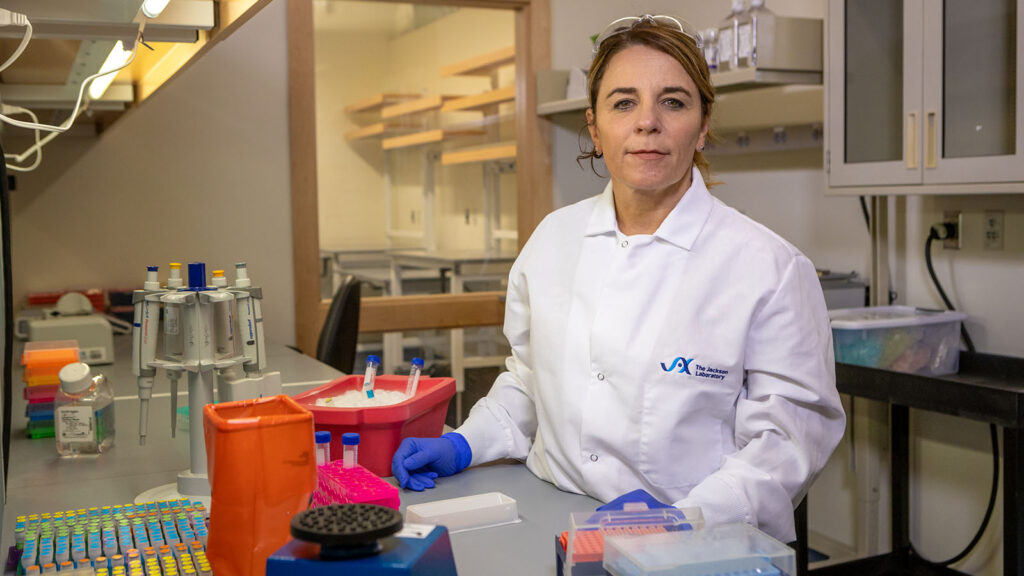
It is with huge pride that we are able to tell you that our research partner, Cat Lutz, Ph.D., M.B.A. was recently named vice president of the Rare Disease Translational Center at The Jackson Laboratory, a non-profit biomedical research institution headquartered in Bar Harbor, Maine. With this appointment, JAX marks an important step in the expansion of its commitment to rare disease research.
For the past six years, The JAX Rare Disease Translational Center has worked with dozens of rare disease foundations and their associated research teams to generate custom mouse models that represent rare conditions in order to pursue new therapeutic interventions. Using CRISPR/Cas9 precision genome engineering, the Center’s expertise has been in assessing the mouse models currently available for rare disorders, determining if new resources are needed and studying rare diseases through these models.
With this expansion, the Center will enlarge its focus to play an integral role throughout the entire rare disease odyssey – from diagnosis to research to drug development. Utilizing the resources of The Jackson Laboratory for Genomic Medicine based in Farmington, Conn., the Rare Disease Translational Center will partner with hospitals and medical institutions as they diagnose rare diseases. In addition, the Center will collaborate more closely with biotech and pharmaceutical companies to strategize and tailor therapeutics with the aim of accelerating the path to drug discovery for these debilitating conditions. By taking a more holistic approach, the Center will be better positioned to make a significant impact in the lives of those living with rare diseases.
Under Lutz’ leadership, the Center will bring together core capabilities in genetic engineering, phenotyping and in vivo pharmacology to support research and therapeutic advancement for patients and families with rare diseases. The program will expand to further leverage developing technologies in genetic medicine and delivery, using the extensive collection of mouse models that exist in JAX’s repository as well as newly engineered models at JAX.
“I’m extremely honoured to be in a position that allows me to focus on the incredible people who make up the rare disease community,” said Cat Lutz, Ph.D., M.B.A. “After over 25 years in this field, and with the growth of the Center, I’m thrilled to continue and expand on the work we have been doing to make strides for this community.”
Lutz has worked in mouse genetics throughout her career and previously held the position of senior director for the In Vivo Pharmacology and Efficacy Testing Service at JAX. Throughout her career she has been involved in major milestones within the rare disease community such as with the first FDA approved therapy for Spinal Muscular Atrophy. The pathway for this drug approval began in 2005 when Lutz began working with collaborators, creating the repository for SMA mouse models at JAX. The efforts expanded in her lab to include extensive preclinical research studies to address questions related to clinical trials in patients, such as the timing of the therapeutic delivery and required target tissues. Thousands of SMA models were distributed to researchers around the globe, which later laid the foundation for the successful clinical trials of the drug Spinraza, which today provides tremendous hope to so many patient populations.
“I believe that with this increased focus on the Rare Disease Translational Center at JAX, we can reach important new milestones for even more patient populations,” Lutz said. “There are over 7,000 known rare diseases, and with new technologies and scientific advancements, we will be able to make a significant impact for many, many people around the world.”